Moving away from the ocean focus from the past two weeks, todays post explores a recent article by the BBC about the identification of a new wild cat in Brazil by Coles (2013).
Everyday I look on Nature and there is an article about a new species being discovered. These new species are found in a range of locations from Burma to closer to home in the United Kingdom. With new species being discovered everyday, is it possible to make the judgement that biodiversity is possibly increasing on local scales around the world?
Check out the Coles (2013) article and make up your own judgements. It is important to note that we do not know everything about the natural world and therefore to make all encompassing conclusions about global biodiversity, is extremely difficult. These conclusions are strictly based on the knowledge we do have while accepting the unknown.
Articles to check out:
New species of Hammerhead shark discovered off Carolina coast (Kenniff, 2013)
Spectacular New Species Found in the Lost World (Dell'Amore, 2013).
New Species of 'Skeleton Shrimp' discovered (Vincent, 2013).
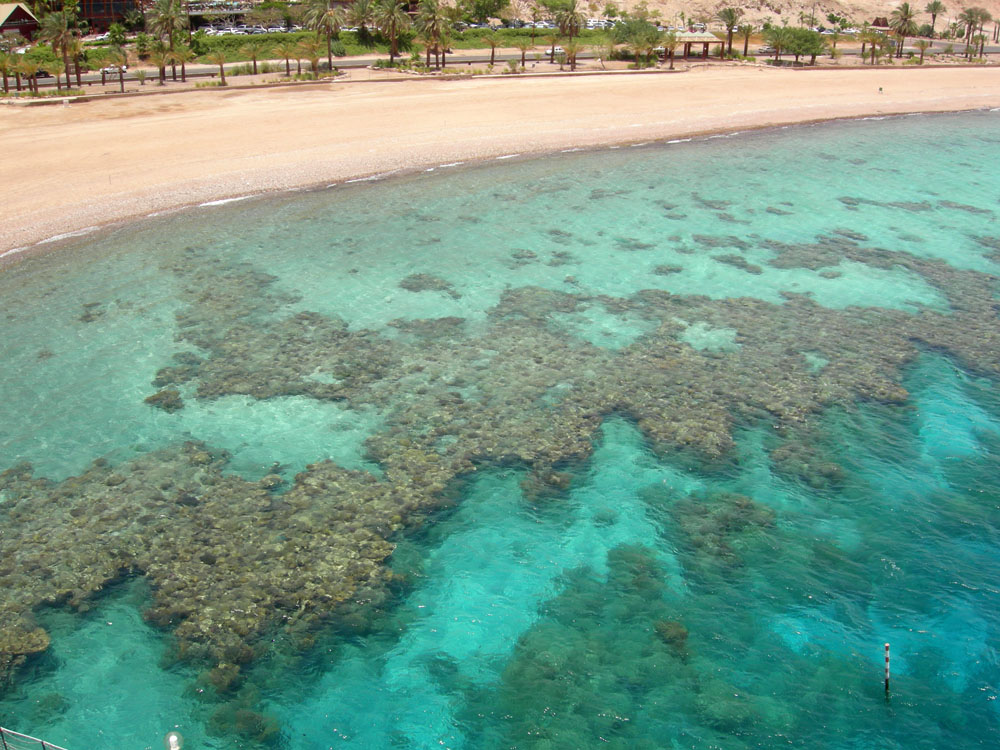
Being an ecology enthusiast with a particular fondness for corals, todays post is one of my favourites so far. We all acknowledge that coral reef ecosystems are extremely important to the health of the oceans. While they cover only 1% of the oceans, it is estimated that one quarter of all marine biodiversity spends, at least part of their life on a coral reef. When corals are mentioned most people think of tropical waters and an instant picture of the Great Barrier Reef pops into mind. To me the term 'coral' automatically conjures up brightly coloured images present in the Pixar film, Finding Nemo.
However, as the NOAA state shallow water corals are only one type. There are cold water corals and deep sea corals that have limited light producing soft corals.
What are corals?
The Oxford English Dictionary defines corals as ' hard stony substance secreted by certain marine coelenterates as an external skeleton, typically forming large reefs in warm seas'.
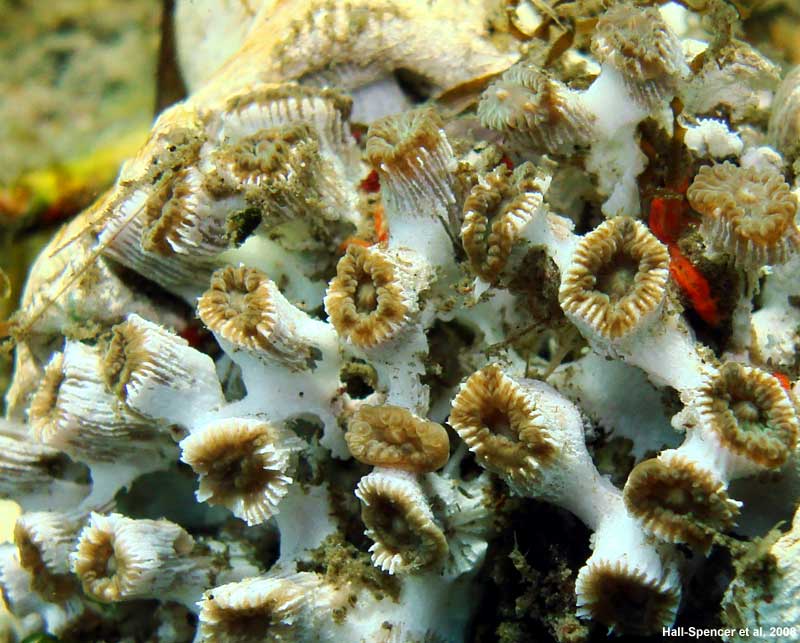
Corals are invertebrate animals belonging to a group called the Cnidaria. They can exhibit a wide range of colours, shapes and come in all sizes. Each coral is made up of hermatypic polyps and most live in colonies. A coral colony can grow to be very large indeed. The hermatypic polyps produce calcium carbonate to form calyx (NOAA, 2011). The calcium carbonate adds to the coral skeleton forming the beginnings of the coral structure. Corals develop slowly over millions of years, today the corals you see have been growing for around 50 million years. To date there are around 800 known species of hard coral and more being discovered, just as new species of marine animals are being found in the most remote ocean locations every day.
Coral reefs are found throughout the oceans, from deep, cold waters to the shallow tropical waters of the Indian Ocean. Tropical reefs extend from 30 degrees North and South of the equator. However, cold corals can also be found in places closer to home such as off the West coast of Scotland and Ireland. Cold water reefs have also been found in the Mediterranean.
There are various factors that cause the pattern of coral reefs throughout the world. These include: The role of ocean temperature The effects of emersion Bathymetry Levels of sedimentation
Types of Coral Reef
Fringing Reef: most common type of coral reef located close to land.
Barrier Reef: looks like a fringing reef, however, it is located further away from the shore. They are separated from the shore by a band of water.
Atoll: large ring shaped reef, which create a lagoon in the middle.
Anthropogenic threats to coral reefs Corals are ecosystems that have been developing for years, and in this time have been subjected to natural change. The worry now is that with increasing human stresses, corals may not be able to cope. WWF (2010) states that already 'one quarter of coral reefs are subjected to damage beyond repair, with another two thirds under threat'. With reef building corals representing a critical component for marine biodiversity, it becomes important to conserve these ecosystems in order to conserve the species that use coral environments (Huang and Roy, 2013).
Destructive fishing practices: Blast, dynamic fishing and bottom trawling are types of fishing practices that cause devastation to sensitive coral reefs. Bottom trawling has been widespreadsince the 1980s. The large rubber tires on the nets can damage the coral structures. Dynamic fishing is where explosives are set off underwater destroying coral. This has been particularly a problem in South East Asia (Cadwell and Fox, 2006).
Pollution: Urban and industrial waste being released into the oceans which are poisoning the reefs. Pollutants increase the amount of nitrogen in the waters causing an overgrowth of algae, which can smother the reefs, concealing them from sunlight which the polyps need to survive (McManus, 2000).
Sedimentation: Anthropogenic coastal construction, mining, logging and tourism developments can cause erosion. This erosion causes increased levels of sediment being produced. Sediment covers coral, almost suffocating it and causing the corals to produce a protective mucus (MES, 2002). This process takes incredible amounts of energy and if corals are overworked they can die.
Ocean acidification: As mentioned in my previous post, marine environments are particularly threatened by climate change and the increasing pH of ocean waters. Since the beginning of the industrial revolution, the oceans have been absorbing increasing amounts of excess carbon dioxide. With ocean acidification, corals cannot absorb the calcium carbonate needed to maintain their structures and therefore the reef will dissolve (SCOR, 2009).
Ocean acidification effects on coral reefs.
Global warming and coral bleaching: In the Anthropocene, global warming is a known threat to many ecosystems. It occurs because carbon dioxide and other greenhouse gases cause a blanket, preventing heat from the sun to escape, warming the atmosphere. Ocean warming is extremely devastating to coral biodiversity, which is sensitive to changes in temperature. If oceans stay warm for several weeks, zooplankton leave the corals, turning them white in the process, because it is the zooplankton that gives corals their unique colours. NOAA (2013) discussed how in 2005, the USA lost half of its coral reefs in the Caribbean in only one year due to a huge coral bleaching disaster.
Coral Bleaching: showing the distinctive white coral.
However, a recent study showed it is not all bad news. Elevated nitrogen and phosphorous at a study site in Florida Keys from 2009-2012, showed coral bleaching. What this study also noted was that once the injection of pollutants ceased, the corals became able to recover and in a surprisingly short period of time (PhysOrg, 2013).
There are other threats to corals, however I have rambled on too much already. I hope you enjoy this post and it provides a insight into the marine biome and the anthropogenic impacts of coral ecosystems. Being a corals fanatic, I find it extremely worrying that humans can be having such disastrous effects to one of the world's most beautiful environments. I, for one, want to be able to dive and explore these unique ecosystems, enjoy their bright colours and extraordinary patterns and it would be devastating if these environments were not there for people to enjoy.
Following on from the videos I posted last week, my post today is going to focus on a recent paper by Barnosky et al. (2011). Barnosky provides a detailed background to previous mass extinctions and also focuses on arguments surrounding the possibility of a sixth mass extinction.
What is a mass extinction?
The answer lies in the past. Palaeontologists characterise a mass extinction as a short geological period in Earth's history where more than 75% of estimated species become extinct (Jablonski, 1994). This type of extinction has only happened 5 times in the past 540 million years (Barnosky et al. 2011). The 5 mass extinctions occurred at the end of the Ordovician, Devonian, Permian, Triassic and Cretaceous periods. Will the anthropocene hold the next mass extinction?
Biodiversity of the planet over time, showing the five mass extinctions in history. Graph adapted from Wilson (1992)
Why do we care about past extinctions?
Scientists are interested in past extinctions because they provide a key to the future. The most famous species extinction was the Cretaceous- Tertiary which occurred 65 million years ago. This is the extinction that is famed for the death of the dinosaurs. One hypothesis for this decline was climatic cooling causing a reduction in hospitable habitats (this is the worry for current global warming). The Permian extinction (248 million years ago) also causes scientists to quake in their boots due to being caused mainly by global environmental change, including methane release from the sea floor, increased sea level and a shift in ocean circulation (Eldredge, 2011). The main concern is that history will repeat itself? Increasingly, academics are recognising contemporary species extinctions as part of an overarching 'sixth mass extinction'. Anthropogenic influences such as habitat fragmentation, disruption by invasive species and changing global climate all directly contribute to the decline of biodiversity. Scientists are now worried that the Earth will, in a few centuries, be under threat from major species decline.
Before we can come to any sort of conclusions, it remains vital to establish the current situation within the context of previous mass extinctions. There have been many landmark studies that have told of modern extinction rates an order of magnitude higher than than previous extinction rates (Doubleday, 1992; May et al. 1995). The below chart explores the extinction magnitudes of IUCN assessed taxa in comparison to the 75% benchmark (International Union of Conservation Red List, 2010). The black icons add the species that are currently 'threatened' species to those that have been extinct for over the past 500 years. Therefore, we can see that all species are threatened in the age of the anthropocene. Groupings such as mammals, birds and amphibians, which have had historically the lowest percentages of species extinctions, nowadays have the highest numbers of endangered and threatened species. Could these species be susceptible to catastrophic extinctions? The current numbers show the sixth mass extinction is looming quite far away, however anthropogenic activities are causing more and more species to become increasingly threatened. Barnosky et al. (2011) suggests that if all 'threatened' species disappeared we would be half way towards a possible anthropocene mass extinction.
Extinction magnitudes of IUCN assessed taxa (2010)
It is not just terrestrial species that are vulnerable, marine species are particularly susceptible to mass extinction. At least 830 marine species have been classified as critically endangered, endangered or vulnerable. Assessments for marine species are lagging behind those for terrestrial species. However, the IUCN aimed to have 20,000 marine species assessed by 2012. It is important to understand that the past drivers of extinction in the oceans are the same as the current threats (as can be seen in the chart below). Marine scientists that released the State of the Ocean 2013 report on 3rd October 2013, gave a warning stating 'we are entering an unknown territory of marine ecosystem change, and exposing organisms to intolerable evolutionary pressure. The next mass extinction event may have already begun'. The report explains how the ocean is the world's largest carbon sink and the increasing carbon dioxide levels are creating a 'deadly trio of impacts' including ocean acidification, ocean warming and deoxygenation all of which are threatening marine biodiversity. If you want to know more about this , check out The AnthropoSea, a blog dedicated to investigating the 'deadly trio' and its threat to marine biodiversity.
What is the situation today?
Today, the rapidly changing atmospheric conditions and warming of above average interglacial temperatures cause species to become vulnerable. With rising carbon dioxide levels, habitat destruction, pollution, overfishing, over hunting and invasive species, the world now has more ecological stressors than many species have ever experienced before.
Species extinctions rising with increasing human populations.
The worrying question is how will this affect the already threatened species? It seems quite plausible that if humanity carries on living in the same way, it will not be long before the 'sixth mass extinction' is just around the corner. It is encouraging that there is still much of Earth's biodiversity that can be saved. However, it is daunting that in order to save such species there must be rapid reversal of escalating threats. How realistic is this?
While I was researching for this blog post I came across a very interesting short film that had just been released called the 'Last Hours'. The film had been produced for presentation at COP21 (the 21st session of the Conference of the parties to the UNFCCC expected to take place in 2015). The film maker was Thom Hardmann, an American radio talk show host and best selling novelist. I watched the film and I have to say although highly dramatised, with a soundtrack that could rival 'the day after tomorrow', it provides an insight into the possibility of another mass extinction. The film has caused a media outpour, with the likes of Leonardo DiCaprio tweeting his affection for the film (thats the reason we know it is worth a watch!).
However, the film has also received criticism for its methane hydrates hypothesis. In the recent IPCC 2013 report, many of the catastrophic changes being forecast were described as likely, unlikely or exceptionally unlikely. The melting of permafrost and the subsequent release of huge reservoirs of methane is deemed exceptionally unlikely, therefore the film has to be taken with a pinch of salt. Why not have a look and make your own judgements.
Do you think we are in a sixth mass extinction, or are we very close to entering one?
To end this post here is just a snapshot of some news articles that have documented species extinctions and the catastrophic possibility of another mass extinction.